7 Common Math Mistakes and How to Avoid Them
Catch the error type before it repeats.
Error check
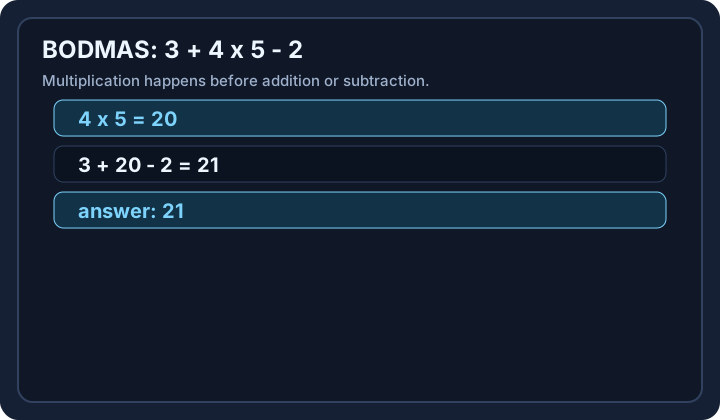
Handle operation order before speed
A fast answer is only useful after multiplication and division are placed correctly.
- 1Mark multiplication and division first.
- 2Evaluate those pieces.
- 3Return to addition and subtraction from left to right.
Common slip
Do not run left to right until the higher-priority operations are already simplified.
Sign check
Compute size first, then apply the sign
For one negative factor, the product is negative after the positive size is known.
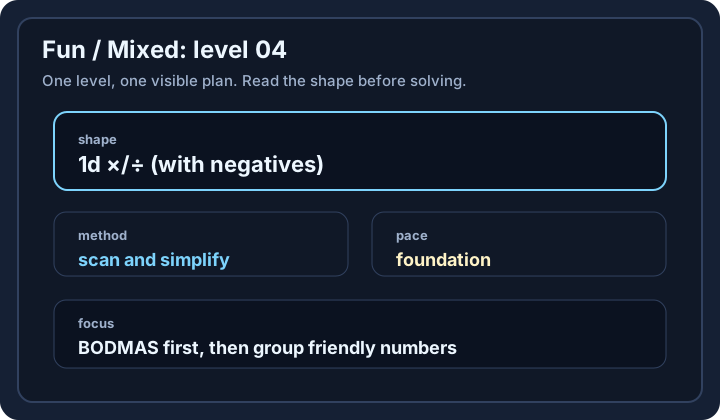
- 1Ignore the sign for one breath.
- 2Compute 8 x 6 = 48.
- 3Apply one negative sign.
Fast check
One negative makes a negative answer; two negatives make a positive answer.
Most errors repeat. That helps: once you can name the error type, you can attach a small check to it.
Promise
This page is a mistake checklist, not a long lesson. Use it after a set, then drill the one error that appeared most.
Worked Example
For 2 + 3 x 4, multiply first: 3 x 4 = 12, then add 2. The answer is 14, not 20. One marked operation changes the whole result.
Mistake to Avoid
Do not review every error at once. Sign errors, decimal drift, distribution slips, fraction denominators, and percentage reversals need different fixes.
Practice Drill
Take five missed questions. Label each one: sign, order, decimal, distribution, fraction, percentage, reading, or speed. Redo only the largest label.
Recap
Accuracy improves when every miss becomes a named pattern. Name it, build one check, then return to the same kind of problem.