Estimation: A Practical Math Skill
Bracket the answer before exact calculation.
Estimate first
Round the noisy number, then correct
Rounding gives a fast bracket; the correction keeps the answer honest.
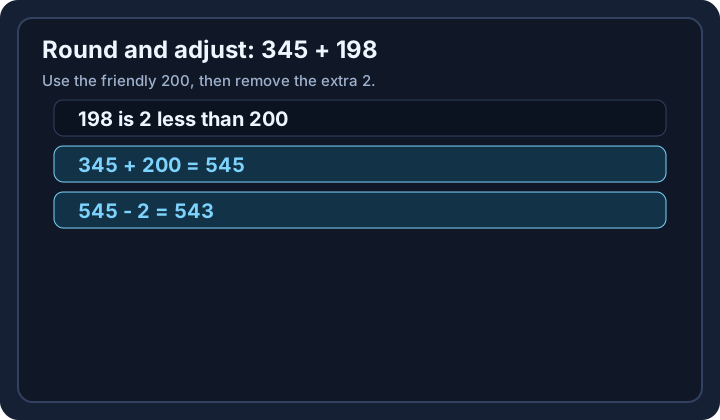
- 1Round 198 to 200.
- 2Compute the easy sum.
- 3Subtract the extra 2.
Use the bracket
Before correcting, notice the answer must be just under 545. That catches many input slips.
Division estimate
Use a nearby product to bracket the quotient
The nearest easy product tells you whether the quotient is too high or too low.
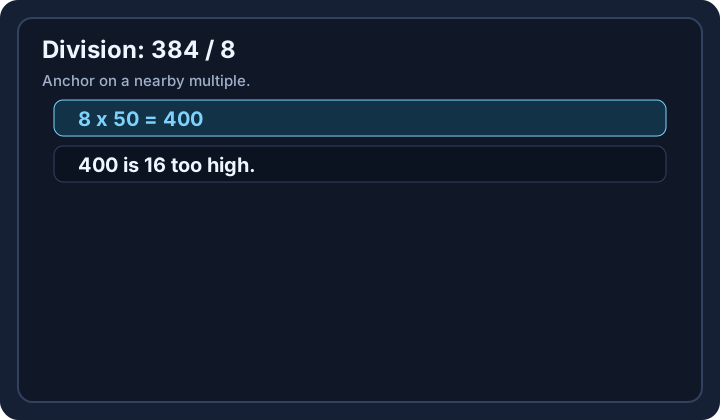
- 1Round to a nearby friendly dividend.
- 2Divide the friendly number.
- 3Adjust toward the exact quotient.
Answer range
Since 384 is below 400, the quotient must be below 50.
Estimation gives a useful range before exact calculation is worth the time.
Promise
Use rounding, compatible numbers, clustering, and front-end adjustment to catch answers that are clearly too large or too small.
Worked Example
Estimate 487 x 23. Use 500 x 23 = 11500 or 490 x 20 = 9800. Both say the exact answer should sit near eleven thousand.
Mistake to Avoid
Do not treat an estimate as a final answer when exactness matters. Use it as a bracket, then calculate if the decision needs precision.
Practice Drill
Before exact work, estimate these: 621 x 49, 8347 / 41, and 17% of 893. Then calculate and compare.
Recap
A good estimate is not random. It is a fast range that protects you from bad inputs, decimal slips, and impossible outputs.