How to Square Two-Digit Numbers Mentally
Choose the squaring pattern before multiplying.
Think in columns
Square a two-digit number with Duplex columns
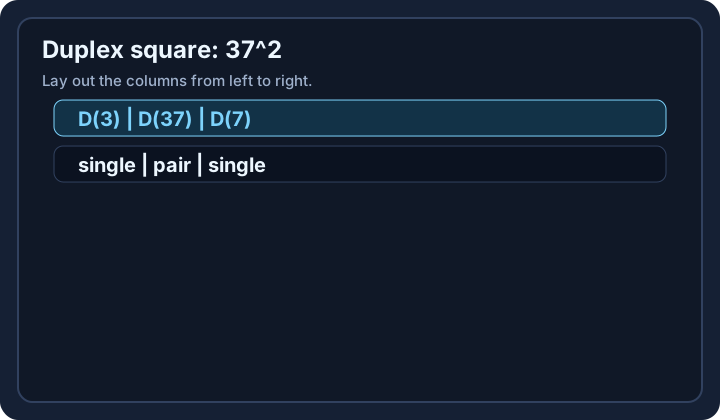
For 37 squared, read the square as three small columns instead of one long multiplication.
- 1Find D(3), D(37), and D(7).
- 2Apply place values from left to right.
- 3Carry cleanly and read the final square.
Common slip
Do not treat the raw middle column as a digit. Normalize the carries before reading the answer.
Large square
Split the base before squaring
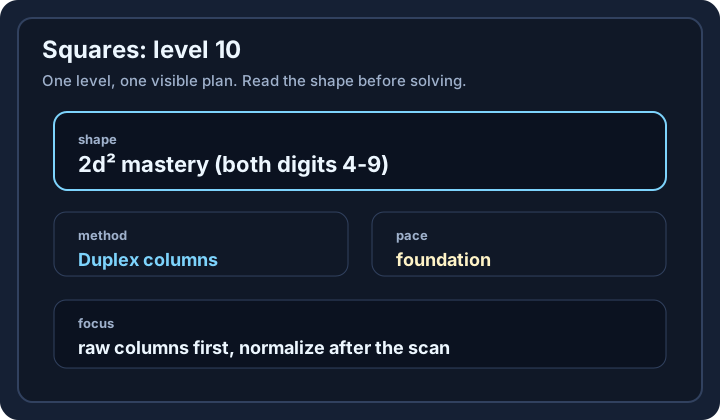
For a larger number, square the main place, add the double product, then square the tail.
- 1Square the large place first.
- 2Add the double product.
- 3Add the tail square and normalize.
Mind the carry
Keep each raw part visible until the final carry pass; early carrying causes most slips.
Squaring gets easier when the number shape chooses the method.
Promise
Use endings in 5, near-50, near-100, or anchor-split methods instead of starting a long multiplication every time.
Worked Example
For 37^2, anchor at 40. Use (37 - 3)(37 + 3) + 3^2 = 34 x 40 + 9 = 1369.
Mistake to Avoid
Do not mix methods inside one set too early. First make one pattern automatic, then add nearby patterns.
Practice Drill
Do ten examples ending in 5. Then do ten near 100. Finally try five anchor examples such as 37^2, 46^2, and 83^2.
Recap
Pick the method from the shape. The visual blocks handle the columns; this article keeps the decision simple.