Mental Math for Everyday Life: Shopping, Tipping, and Budgeting
Estimate money decisions before reaching for a calculator.
Money estimate
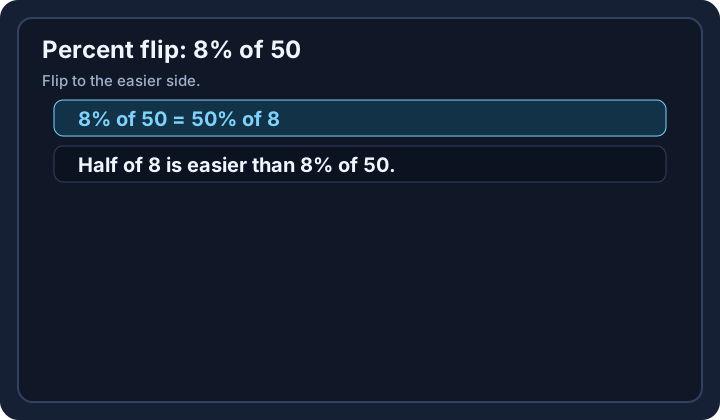
Flip percentages when the other side is easier
Percent questions often become simpler when you swap the percent and the base.
- 1Ask whether the flipped version is easier.
- 2Use halves, quarters, or tenths.
- 3Check that the size of the answer makes sense.
Good use case
Use this for tips, discounts, and quick comparisons where an estimate is enough.
Discount check
Track the product before shifting
A percent answer is a product with two decimal places moved at the end.
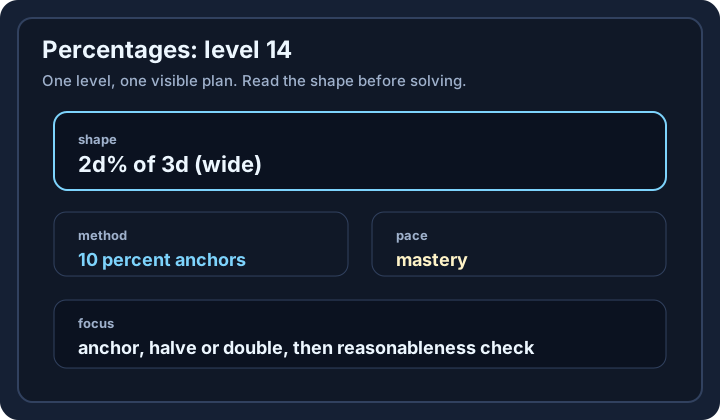
- 1Compute 16 x 436 first.
- 2Shift 20976 into 209.76.
- 3Compare with one fifth of 436.
Money check
If the percent is below 20%, the answer should be clearly below one fifth of the whole.
Mental Math for Everyday Life
Everyday number sense is mostly estimates, percentages, and division.
Promise
Use quick checks for discounts, tips, bill splits, budgets, and unit prices before opening a calculator.
Worked Example
For 35% off an 80 item, combine 30% and 5%. That is 24 + 4 = 28 off, so the final price is 52.
Mistake to Avoid
Do not stack discounts by adding the percentages. A 40% discount followed by 20% off means 100 -> 60 -> 48, not 40.
Practice Drill
Estimate one receipt today: discount, tip, or unit price. Then calculate exactly and see whether your first range was useful.
Recap
The goal is not perfect mental bookkeeping. It is a fast check that keeps everyday decisions from drifting.