Vedic Math Patterns for Mental Arithmetic
Use one named pattern without memorizing a long list.
Near-base method
Use deficits when both numbers sit near 100
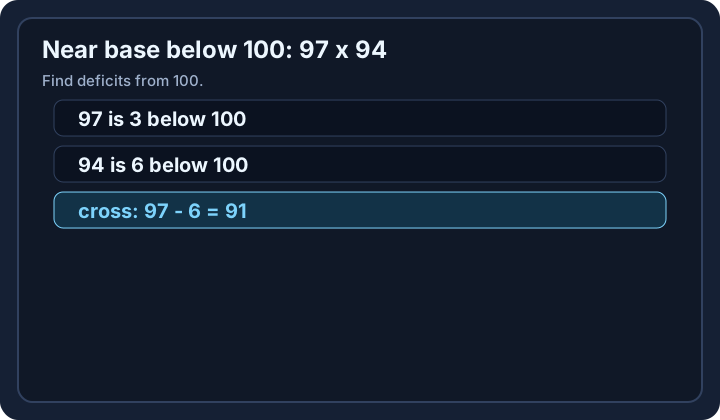
Turn 97 x 94 into two deficits from 100, then combine the cross-subtract and deficit product.
- 1Mark deficits: 97 is 3 short, 94 is 6 short.
- 2Cross-subtract to get 91.
- 3Multiply the deficits to get 18, then join the parts.
When to use it
Use this only when both numbers are close to the same base, such as 100 or 1000.
Crosswise method
Use train windows for two-digit products
Read left edge, cross window, and right edge before carrying the raw strip.
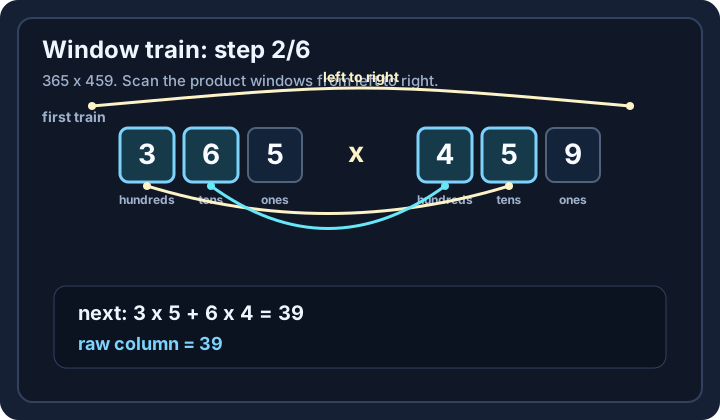
- 1Multiply the left edge.
- 2Add the two cross products.
- 3Multiply the right edge, then normalize.
Why the raw strip helps
Holding raw windows first keeps the thinking order clear; carrying is a final cleanup pass.
You do not need every sutra. Start with one pattern and know when it applies.
Promise
This page keeps three useful families: near-base products, crosswise products, and squares ending in 5.
Worked Example
For 97 x 96 near base 100, deficits are 3 and 4. Cross-subtract to get 93, multiply deficits to get 12, and read 9312.
Mistake to Avoid
Do not use crosswise multiplication when the raw windows feel crowded. Train the window order first, then settle carries once.
Practice Drill
Start near 100 for one set. Then try ending-in-5 squares. Save crosswise multiplication for last because it has more carry cleanup.
Recap
The point is not collecting tricks. The point is choosing the shortest reliable method for the numbers in front of you.