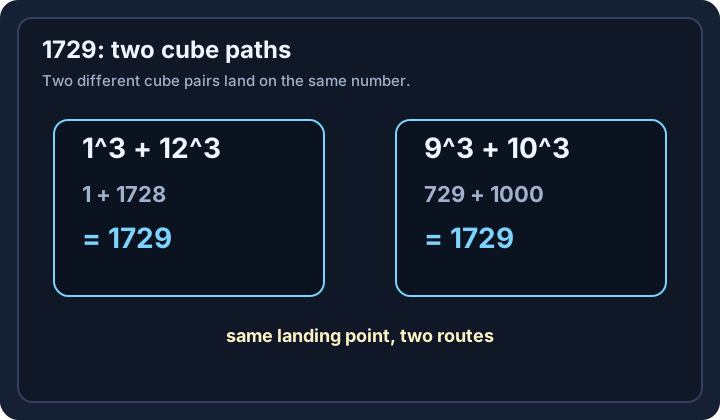
Why 1729 is specialThe smallest number that is the sum of two cubes in two different ways. 2 min read 1Hardy saw a cabHardy called 1729 dull. Ramanujan heard structure in it.2Two cube pathsThe same number appears from two different cube pairs.1729 = 1^3 + 12^3 = 9^3 + 10^33Fast checkRecall the cubes, then add. Both routes land cleanly.1 + 1728 = 729 + 1000 = 17294Why it sticksA number can look ordinary until the right structure makes it visible.5Try the next oneCheck the next taxicab number with cube recall and addition.4104 = 2^3 + 16^3 = 9^3 + 15^3